
Coffee Truth: How to Conduct Professional-Grade Taste Testing at Home
Hello Coffee lover, Pak Kopi here. In this latest segment of my coffee series, Coffee Truth, I dive deeper into the extensive testing I have conducted regarding the “fresh-roasted factor.” Previously, in my video titled Coffee and Consciousness, I outlined my theories and methodology. Since then, I received a compelling message from Gaston, a new roaster based in Poland. Formerly a bank employee, Gaston was inspired to enter the coffee business after watching my TEDx talk. Now roasting with professional equipment, he reached out to understand my specific testing process.
For those who have not yet viewed my TEDx talk, a link will be provided in the description. Gaston’s inquiry centered on a fundamental question: How do we go about doing this testing?
Two Approaches to Testing
There are really two distinct types of testing to consider, depending on your goals and equipment:
- Home Testing: Designed to detect major differences between coffee brewed one day after roasting versus one week after roasting. This can be achieved with standard home equipment.
- Professional Testing: Used to detect subtle differences between coffees roasted just one hour apart (e.g., one hour post-roast vs. three hours post-roast). This requires professional-grade equipment and a rigorous protocol.
The Professional Standard
For professionals aiming to detect minute variances in development time, the setup must be precise. This process involves:
- Dual Group Espresso Machine: Essential for extracting shots simultaneously.
- Separate Grinders: To ensure grind consistency without cross-contamination.
- Strict Protocol: Espresso shots must be extracted at the exact same time, with identical volume and length.
This is a highly detailed and difficult process that requires significant practice. It is why many professionals might skip it to avoid the effort, yet the results are exciting and reveal significant flavor differences.
The Home Barista’s Guide to Cupping
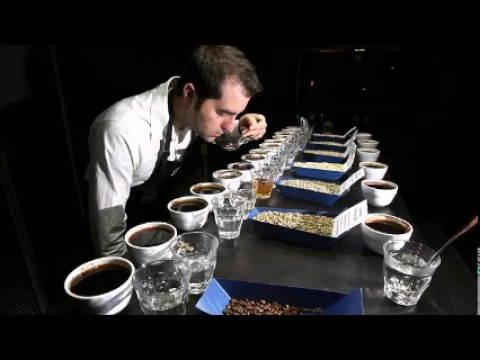
If you are roasting at home, the approach changes slightly. The goal is to conduct a personal cupping taste test to compare fresh coffee against aged coffee. Here is the recommended workflow:
Step 1: Prepare the Samples
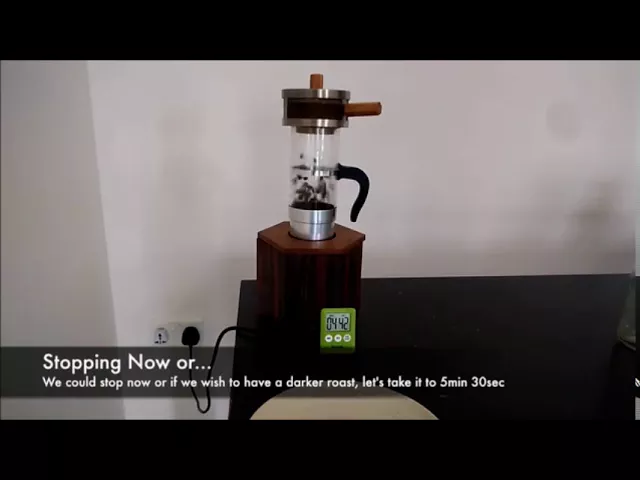
Take a specific bag of green coffee. Roast it and let it rest for a full week. Then, roast the same green coffee again, striving to replicate the exact roast time and color as the first batch.
Step 2: Simultaneous Brewing
The most critical step is brewing the samples at the same time. Temperature and pressure fluctuate as a machine cools down; therefore, the first cup brewed will differ from the second if there is a delay.
- Ideal Setup: Two stovetop Moka pots are excellent for this. You can brew two cups simultaneously to ensure the coffee is at the same temperature and extraction pressure.
- Single Grinder Constraint: If you only have one grinder, do not grind the first sample, clean the burrs, and then grind the second. The residual oils and grounds will alter the flavor profile. Instead, grind both samples consecutively with minimal delay, clean the grinder thoroughly between batches, and brew immediately into the two pots.
Step 3: The Taste Test
Compare the two cups side-by-side. Even with home equipment, you will be able to tell the difference between the fresh brew and the aged brew. While espresso is a concentrated and potent way to make coffee—making these differences easier to detect—this method works well for drip or stovetop brewing as well.
Conclusion
Testing is not just about having expensive gear; it is about discipline and understanding how time affects flavor. Whether you are a home enthusiast or a professional roaster, understanding the “fresh-roasted factor” transforms how you experience coffee.
If you have specific subjects you would like me to address or have questions about this process, please feel free to email me at popcoffee@outlook.com. I would be happy to create a follow-up video to address your inquiries.
This concludes the Coffee Truth segment on cupping and taste testing. See you again soon.