

The Evolution of Coffee Roasting: From Home Hearth to Industrial Machine and Back
Hello, coffee lovers. I am Pak Kopi, and today I want to talk about the history of home roasting. Home roasting used to be practiced hundreds of years ago, specifically in the 1800s and before. Before the mid-1800s, everybody roasted their own coffee at home.
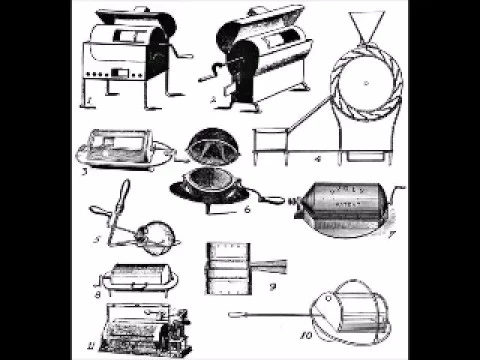
Historical illustrations show that these early roasters varied in size but generally consisted of a drum where green coffee beans were placed. A handle was turned manually to rotate the drum, allowing the beans to roast over an open fire. This method was similar to the open burners we might see today. At that time, there were no commercial roasters because people believed this was the best way to make coffee. Following a tradition similar to the Ethiopian coffee ceremony, individuals would roast the beans, let them cool to room temperature, grind them, and then brew and drink them immediately.
The Rise of Commercial Roasting
The shift away from home roasting began around the mid-1800s with a fellow named J.B. Burns. He theorized that roasting in larger batches would be more efficient and allow coffee to be distributed to people more easily. Consequently, he designed the first commercial roaster, a much larger machine that debuted in the mid-1850s.
Burns attempted to convince people to buy pre-roasted coffee, but it was a slow process. For two to three years, he incurred no profits and struggled to stay in business. The public was simply not ready to abandon the hands-on process they had always used, even though home roasting was incredibly labor-intensive. Imagine hand-cranking a roaster for 20 to 30 minutes; despite the effort, consumers did not see the value in buying ready-roasted coffee until they realized the convenience of having it delivered to them. Once they accepted this convenience, the history of commercial roasting took off.
The Early 1900s and the Shift in Quality
This era of convenience continued until the early 1900s, when two major phenomena changed the face of coffee quality: the invention of vacuum packing and instant coffee. These innovations altered how coffee was stored and consumed, often negatively impacting its perceived quality. Without vacuum sealing, coffee delivered by commercial roasters was still relatively fresh, but the introduction of new preservation methods and instant options marked a significant turning point in the industry.
The Modern Return to Home Roasting
In recent years, the tide has begun to turn. With the advent of modern machinery and equipment, home roasting has become easy, fun, and convenient again. The results are now unparalleled in the coffee world. If you want great coffee, the consensus is that you must roast it yourself.
As a “coffee truther,” I encourage you not to take my word for it blindly. Please go out and do your own research, try it for yourself, and talk to people who roast their own coffee at home. If you give it a try, you will likely see a huge difference in your coffee experience. The change will be dramatic; not only will you have access to the best coffee in the world, but you can also save a significant amount of money compared to spending five dollars or more at a place like Starbucks for a single cup.
The journey of coffee roasting has come full circle, offering us the best of both worlds: the convenience of the past and the high-quality results of the present.