Mastering the Fluid Roast with the Power Roaster: A Complete Demo and Guide
In this demonstration, I will walk you through a complete roast cycle, contrasting it with a continuous roast session. For this demo, we will cut the process to show the beginning, middle, and end of the roast, followed by the cooling phase. In contrast, a continuous roast, like the one performed once we are in the cooling chamber, runs uninterrupted until the very end.
To begin, I have already weighed out exactly 120 grams of green coffee beans. It is critically important that you stick to this specific weight. This machine is pre-calibrated with a simple on-off switch designed specifically to roast 120 grams in approximately six minutes. Consequently, there is no need to adjust airflow or volume settings. You simply pour in the 120 grams and turn the machine on.
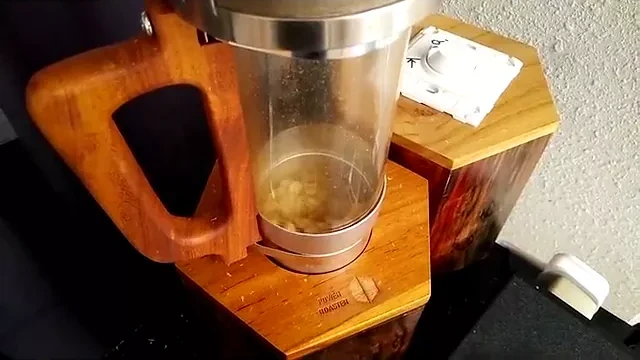
Upon activation, you will immediately see movement inside the chamber. This agitation is the primary signifier that the roast will be even. We utilize a fluid roasting technique, which requires significant airflow to rotate the coffee beans thoroughly. Our machine employs a vortex rotation—similar to a tornado—that circulates all the beans. This differs from other machines that merely shoot air upward from the center, causing beans to rotate outward and heat passively. The vortex method ensures a smooth, even roast.
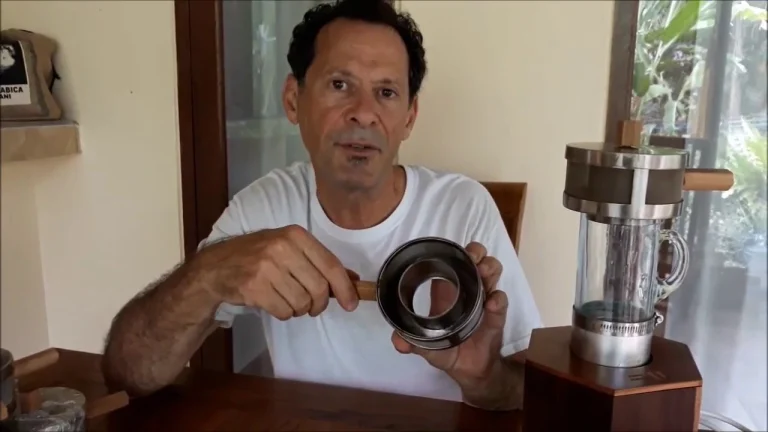
Furthermore, the machine is exceptionally clean. All the chaff (bean skins) falls directly into the chaff collector. At the end of the roast, you can simply empty this collector, readying the machine for the next batch. It is imperative to empty the chaff catcher after every single roast. Leaving chaff inside while performing another roast creates a fire hazard, as the accumulated skins can ignite. We have never experienced fire or safety issues, provided this maintenance step is followed.
The Roast Progression
The Beginning
At the start of the roast, the beans are still heavy and green. As the process continues, we will observe the beans losing weight and shifting color.
The Middle
Just a couple of minutes into the roast, before any cracking occurs, the beans begin to lighten, taking on a yellowish-light brown hue. You can see them moving around the chamber nicely. First crack is expected to occur around the three-and-a-half-minute mark.
Once first crack hits, the beans are a distinct light brown. While the roast has not finished, this is the stage where you can pause. If you wish to continue, simply turn the machine back on; if you prefer to stop, just leave it off. There is no automatic shut-off timer. This manual control allows you to stop the roast precisely when you achieve the color you desire.
The End
As the roast nears completion, the beans will begin to darken further. Once you reach your desired color, you stop the machine immediately. You do not need to wait for a timer to ring.
The Cooling Process
Soon, we will stop the roast and transfer the beans directly into the cooling system. Originally, we assumed the roasting chamber needed an extra cycle to cool down, but our testing revealed otherwise. The chamber cools rapidly, often in just two minutes. This efficiency is crucial for our goal: providing a high-quality roasting system under $100.
The integrated cooling system makes the process easier and more efficient than alternative methods. If you stop a roast on a different machine, you must either leave the fan on to cool it or let it cool naturally. Both methods result in a loss of control over the final development of the coffee. With our system, you maintain full control: you stop the heat, and the dedicated cooler takes over immediately. Other machines may switch to a “cooling mode,” but their internal components remain extremely hot, taking much longer to dissipate heat. Our two-minute cooldown ensures the beans are ready for the next step without stalling the roast’s development.
Final Results and Cleanup
After approximately twenty more seconds in the cooler, the roast is complete. The beans are dumped onto a plate. Notice how the chaff catcher has kept the entire area completely clean, capturing every piece of chaff. This design, featuring non-hot stainless steel handles, makes the machine easy to handle safely.
The finished roast is now at room temperature, ready for processing, grinding, and brewing. While the beans from this specific batch (sourced from Bali) show some variation in sorting—unlike the high consistency found in beans from Guatemala or Costa Rica—the color is gorgeous and perfect for brewing.
To conclude the cycle, you simply empty the chaff catcher into the trash or compost. That is the entire process. By combining precise weight control, vortex rotation, and an efficient integrated cooling system, this machine simplifies the art of home roasting. Thank you for watching this demo, and we are working diligently to get these machines into your hands as soon as possible.