
The Aliveness of Freshly Roasted Coffee: A Demonstration
Introduction
Pak Kopi introduces a demonstration designed to showcase the “aliveness” and active chemical compounds present in freshly roasted coffee. The goal is to illustrate, firsthand, how fresh ground coffee interacts with water—a dynamic process that does not occur with stale, pre-ground coffee that has been sitting around for too long. This session focuses exclusively on beans that have just been roasted to highlight their vibrant potential.
The Source Material
The demonstration utilizes 100% Arabica coffee grown in the mountains of Kintamani, Bali. A single scoop of these green beans is placed into a power roaster. The batch size is approximately 70 grams, which is sufficient to brew a decent amount of coffee, roughly enough for an eight-cup pot.
The Roasting Process: Fluid Bed vs. Traditional Methods
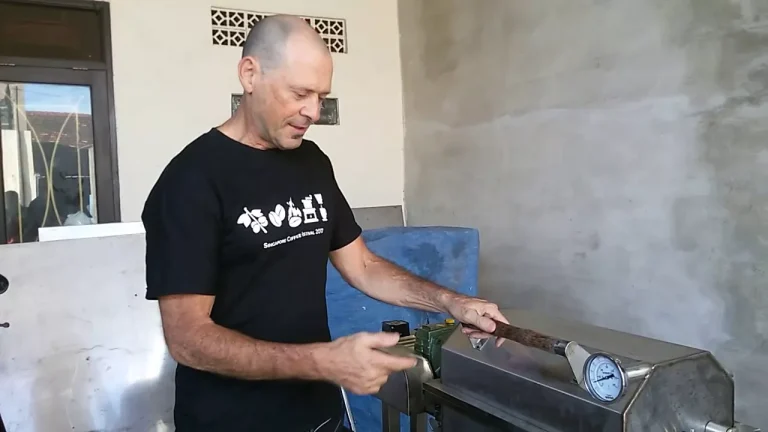
The roasting device used is a fluid bed roaster. This technology operates differently from traditional methods:
- Fluid Bed Method: In this system, coffee seeds are heated by air rather than direct contact with hot metal surfaces. The beans are suspended and rotated by the airflow, ensuring that every bean is heated evenly.
- Traditional Pan Roasting: Historically, coffee was roasted on open fires or pans. While this method uses the beans immediately after roasting, it suffers from uneven heating. Much like frying an egg, one side of the bean may become overcooked while the other remains undercooked, despite stirring.
- Drum Roasters: Most commercial roasters use large stainless steel drums that rotate with propane heat. While effective, the fluid bed method offers a superior, more uniform roast profile in a much shorter timeframe.
Efficiency and the “Second Crack”
One of the primary advantages of the fluid bed roaster is speed. The entire roasting process takes only about four minutes.
- The beans are heated until they reach approximately 220 degrees Celsius.
- At this temperature, the beans undergo the “second crack,” emitting a distinct popping sound.
- Once the second crack begins, the roasting is complete.
Extending the process to 20, 30, or 40 minutes offers no significant benefit for this type of roast. The rapid heating ensures that the coffee is used immediately, preserving its peak freshness.
Sensory Experience: Aroma and Taste
The moment the beans are ground, the aroma is described as unlike any other in the world.
- Aroma: The scent is intense and clean. If the coffee smells flat or bitter, it is deemed unsuitable for consumption. The ideal coffee smells sweet and inviting.
- Flavor Profile: Freshly roasted and ground coffee is characterized as muddy in a positive sense, meaning it is rich and full-bodied, yet sweet. It lacks the bitterness often found in stale coffee.
- Health Perspective: The speaker argues that if the coffee looks good, smells good, and tastes good, the body perceives it as beneficial. Conversely, flat or bitter smells indicate that the coffee is “dead” and stale.
Preparation and Conclusion
The freshly roasted beans are ground directly into a six-cup French press. The grounds are then subjected to boiling water. The resulting brew is described as strong, sweet, and amazing. The video concludes with the anticipation of enjoying this freshly prepared coffee, emphasizing that the quality of the bean, the roasting method, and the freshness of the grind are all critical factors in the final cup.